
Latest news…
Music Makers: with Steve Phillips, Producer, Manager and Tenor
Music Makers: with Amy J Payne, Mezzo-soprano, Actor and Director
Music Makers: with Robert Howarth, Conductor
Music Makers: with John Savournin, Bass-Baritone, Director, Producer
Who’s in the audience today?
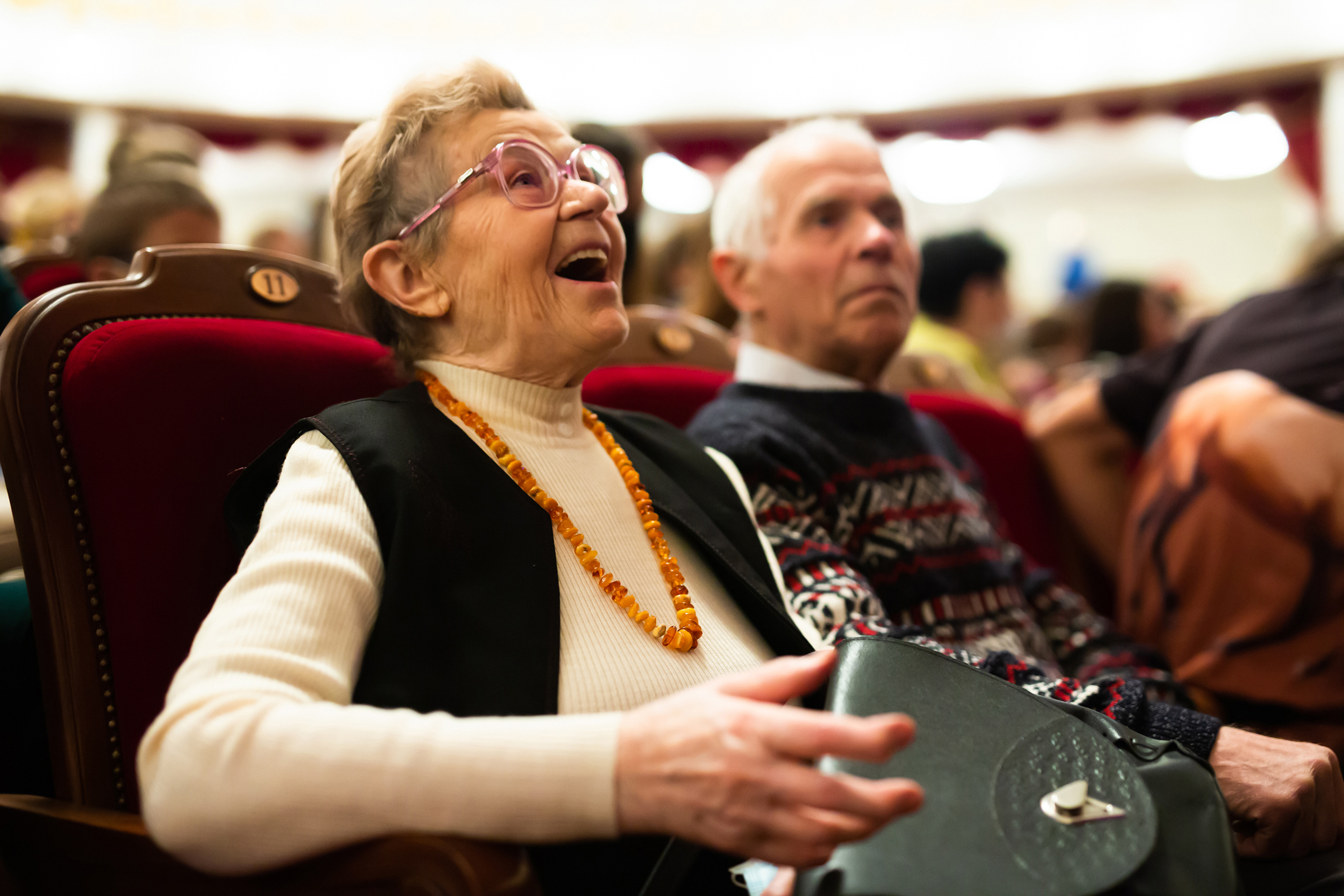
Who’s in the audience today?
Before the interval lights went down at a recent performance, I found myself chatting to the woman seated next to me. Half the show had already been experienced, and I asked a simple question: how are you enjoying the opera?
Sally is 76. She spoke with real enthusiasm about the production, praising the voices and adding, entirely unprompted, that she didn’t mind the modern dress at all. That alone made me curious. So I asked another question, one I’ve increasingly come to value.
What brought you here today?
Sally grew up listening to old-school musical theatre in the family home — the kind many of us can still hear in our heads decades later. Later came Andrew Lloyd Webber, and operetta such as Die Lustige Witwe. For Sally (and for many), those shows formed a tangible bridge to opera.
In her twenties, living in London, a boyfriend took her to the opera. That first visit marked the beginning of a relationship with opera that has now lasted over 55 years.
Compound interest at its best.
These days, living near Grantham, Sally enjoys seeing opera more locally, in part because it’s more affordable. We find ourselves at the Theatre Royal, Nottingham. She also likes to be close to the action. She knows she could sit in the balcony in London, but she wants a good seat. We’re in the stalls.
Cinema screenings are another way she and her friends keep opera in their lives now. Not the same as live, she says, but good enough. And crucially, accessible.
I asked Sally how she finds opera in its original language. “Oh, I prefer it,” she exclaims. She goes on to explain that she was a language teacher and speaks several languages, and that she loves recognising words and working out the meaning as she listens. It’s also worth noting: Sally doesn’t sing, and she doesn’t play any musical instruments.
Listening to her, I am reminded that many of us start in similar places — musical theatre as a first doorway, then operetta, then opera. Different generations. Familiar pathways.
After the show, I spoke to Liz, 82. She and Sally had come as part of a larger group that enjoys live theatre and music, travelling together for over an hour to attend the weekday matinee. Her eyes were still brimming with tears long after the cast had left the stage.
What struck me most was this: when Sally and Liz come to the opera, their bodies arrive carrying decades of emotional investment. They have seen many productions of La Bohème. They know the story inside out and have shed many tears before. They take their seats already primed to respond emotionally to an opera they know well.
For us as singers and instrumentalists, it’s a gift we sometimes forget: audiences don’t require perfection to be moved. They need commitment — to the music, the story, and the moment. We are enough more often than we realise.
Everyone I spoke to at that performance commented on the power of music to shift them out of their current state. To transport them. To move them towards feeling something different to whatever they arrived carrying. That is no small thing to offer another human being in the middle of an ordinary week.
And it’s also why I want to encourage something very simple over the coming weeks.
If you find yourself at a performance, try talking to the person seated next to you — mid-interval, post-show, or before the interval lights go down. Not to network. Not to gather data. Just to ask one human question:
What brought you here today?
Some of the most beautiful, ordinary and extraordinary conversations I’ve had started as a very simple exchange. In this case, when I came back to my seat in the interval and squeezed past, Sally joked that she was glad I hadn’t returned clutching an ice cream — she’d have been very jealous. For me, that was an invitation to talk.
Sometimes conversations end there. Sometimes they don’t. Sometimes they make the day.
If you do end up having one of those conversations and feel like noting it, you could use #WhosInTheAudienceToday. Not to label anyone. Just to notice them.
Melanie Lodge
Founder, Audition Oracle