
Latest news…
Music Makers: with Steve Phillips, Producer, Manager and Tenor
Music Makers: with Amy J Payne, Mezzo-soprano, Actor and Director
Music Makers: with Robert Howarth, Conductor
Music Makers: with John Savournin, Bass-Baritone, Director, Producer
Arriving at conservatoire: prepared, or playing catch-up?
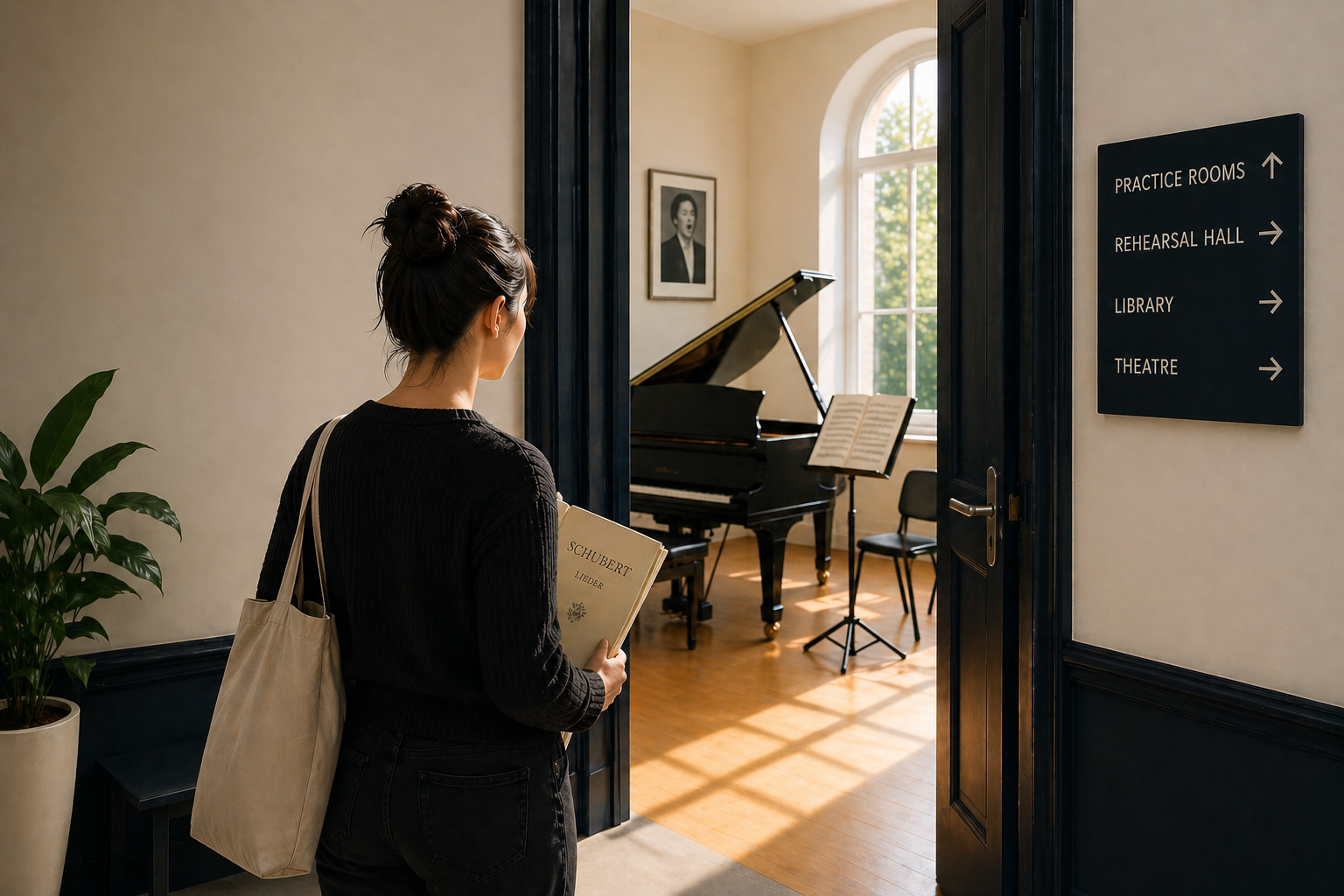
There is a lot of discussion at the moment about funding pressure, tighter programming, and fewer risks across the opera world.
All of that is real. But something else surfaced this month that is worth paying attention to.
A targeted step towards closing the access gap
The Royal Academy of Music has introduced a fully funded Foundation Year, with places ring-fenced for state-educated students who have not had the same level of access to training.
You can read about it here: https://www.ram.ac.uk/study/courses/foundation-year
There has been some pushback on the decision to limit places in this way, particularly around whether restricting access by schooling risks excluding talented applicants who also fall outside traditional pathways.
It is worth being clear what the criteria actually are. Applicants must:
- have been educated in the UK state sector
- be aged 18 to 20
- be UK domiciled
- demonstrate financial challenge through a means-tested assessment
- be able to commit to a full year of study in London
In this case, both criteria are being used, state education and means-testing, which feels like a sensible, belt-and-braces approach.
Neither measure is perfect in isolation. Many of my peers came from very comfortable backgrounds, and a significant number were in receipt of full means-tested maintenance grants. Financial circumstances are not always visible, which makes identifying genuine need more complex. Some students at private schools were also not necessarily wealthy, for example where parents worked within the system.
But regardless of income, those who had been in environments with greater exposure to classical music, and to the unspoken expectations that surround it, often arrived with a deeper understanding of how that world works. That kind of knowledge and confidence can make a real difference to how someone arrives at conservatoire, and how much they are able to make of it once they are there.
Arriving behind
When I arrived at music college, I was greener than Kermit the Frog.
I had not grown up in a family immersed in classical music. There had been no opera trips, no summer choral courses, no national youth choir, and no real sense of how any of this worked or what was expected.
I was lucky in many ways. The teachers at my state schools really cared about classical music. One had been a professional cellist. I worked weekends to pay for singing lessons I wanted to attend. At that time, we also had the opportunity to learn instruments at school.
But in terms of repertoire, musicianship, and basic understanding of the classical world, I was behind. I had never even seen an opera.
“Too late” at 19
Arriving at college at 19 and being told it was already too late, that I didn’t know nearly enough, was, looking back, ridiculous.
Too late because I was not already:
- at a certain level on the piano
- fluent in repertoire I had never been exposed to
- able to sight-sing
Of course it was not too late.
What would have been more constructive is a simple and pragmatic approach. You are here. How exciting. You have this time at college, let’s make the most of it. Here is what we can do in lessons, and what you can do in your own time to broaden your knowledge.
That kind of thinking was missing, both on my part and in the wider training culture.
What this changes
And that is why this Foundation Year feels so sensible. It creates a bridge between potential and preparation. It gives singers the time, structure, and guidance to arrive at undergraduate training ready to make the most of it.
Instead of a crushing sense of needing to catch up, they have the space to build the skills, knowledge, and confidence that others may have absorbed earlier.
They meet their peers not only with raw talent, but with a clearer understanding of the full breadth of what the career actually demands.
It is small. Only a handful of places. But it is targeted, funded, and practical.
And that is a start.
There is also a related question sitting behind this, not just about different starting points, but about what conservatoire training itself needs to look like now. The demands of the profession have shifted, and what singers need to be equipped with is not quite the same as it was even twenty years ago. Another subject wroth returning to.
Were you ready for college?
We’d be really interested to hear your experience — did you arrive feeling prepared, or playing catch-up? You can share your thoughts at [email protected]