
Latest news…
Music Makers: with Steve Phillips, Producer, Manager and Tenor
Music Makers: with Amy J Payne, Mezzo-soprano, Actor and Director
Music Makers: with Robert Howarth, Conductor
Music Makers: with John Savournin, Bass-Baritone, Director, Producer
Five thoughts from the UK Opera Association Conference
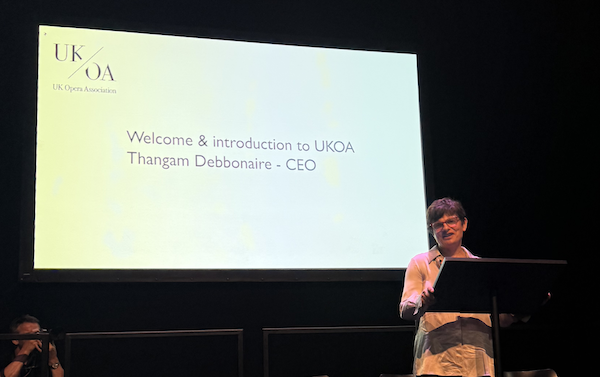
Last week I had the opportunity to attend the UK Opera Association Conference.
Audition Oracle occupies a slightly unusual place within the opera sector. We aren't a producing company nor a freelance artist. Yet we've been part of the opera landscape for more than 13 years, helping artists and opportunities discover each other. As a former freelance singer myself, I was curious to hear the conversations shaping the future of UK opera from both an artist's perspective and as someone now working across the wider sector.
Rather than attempting to summarise every session, I thought I'd share five themes that struck me during the day.
1. The conversation has moved beyond simply making great opera
Much of the day wasn't about productions or repertoire. It was about the systems that allow opera to exist: funding, governance, recruitment, fair work, sponsorship, cross-artform collaboration and organisational resilience.
Great art still sits at the heart of everything we do, but great art also depends on healthy organisations. The conversations reflected a recognition that if we want artists to thrive, the organisations around them have to thrive too.
2. Fair work is finally becoming a central conversation
One of the most valuable discussions for me centred on what good, fair work actually looks like, particularly for freelancers, who make up the majority of the opera workforce.
Bill Bankes-Jones spoke thoughtfully about the realities of freelance life, and one statistic stopped the room. When the hours involved in creating a commissioned work were broken down, one composer's earnings worked out at around 80 pence an hour.
The figure was shocking, but sadly not unfamiliar. I found myself wondering what the equivalent hourly rate would look like for a freelance singer in 2026 once all the preparation, coaching, language work and practice that happens outside a paid rehearsal or performance is taken into account.
My first full year working as an opera singer, back in 2002/03, I earned somewhere around £8,500 in total, despite spending much of the year touring and saying yes to almost every opportunity that came my way. I believe I worked all but one week that year. That £8,500 wasn't a salary; it was everything I earned, from which I still had to cover travel, touring accommodation and all the other costs of being freelance. Looking back, I probably wouldn't recommend quite that approach!
Yet more than twenty years later, some companies are still offering remarkably similar fees.
That isn't simply failing to keep pace with inflation. It raises difficult questions about what a sustainable freelance career actually looks like.
These conversations are important because talented artists can only remain in the profession if they are able to build financially viable lives alongside artistic fulfilment. Diversity within the art form will always be limited if only those with independent means can afford to stay.
3. Thinking beyond funding
I was encouraged to hear Flora McIntosh of OperaUpClose draw attention to the need to think more like businesses. It's a perspective I've shared for many years. Thinking commercially doesn't mean compromising artistic ambition. Whether an organisation is a charity, CIC or not-for-profit, it still needs to understand its audiences, build relationships, generate sustainable income and think strategically if it is to flourish over the long term.
That mindset was reflected elsewhere in discussions about sponsorship. One speaker encouraged arts organisations to stop approaching businesses simply as potential donors. Instead, the advice was to begin with curiosity: What are that organisation's objectives? How might you help them achieve those objectives too?
It reframes sponsorship from a one-sided request for support into a partnership where both organisations benefit.
It also left me wondering whether we sometimes focus too heavily on annual funding rounds and short-term income. John Gilhooly's leadership at Wigmore Hall immediately came to mind. Although not an opera company, he has transformed the Hall's financial position by building an endowment of such scale that it is now financially independent, able to operate without relying on regular public funding and instead supported by the income generated from its investments.
It made me wonder whether there are lessons there for opera. Could more organisations think not only about closing next year's funding gap, but about building permanent financial assets that strengthen artistic freedom for generations to come?
The same principle applies to artists. Most freelancers are, in effect, running small businesses. We spend years developing our craft, yet often give far less attention to marketing, financial planning, networking and long-term resilience. Those things aren't separate from artistry; in many cases, they're what make an artistic career sustainable.
For the many artists who also run their own companies, festivals or charities, there were some particularly useful ideas. One recommendation I hadn't come across before was Reach Volunteering (https://reachvolunteering.org.uk/), a platform that connects charities, not-for-profits and social enterprises with experienced volunteers. One organisation described how a finance professional had volunteered their expertise for several years, helping to strengthen the organisation before eventually becoming a significant donor.
It was a useful reminder that people often contribute far more than money when they genuinely believe in an organisation's purpose and the people working tirelessly to keep it moving.
4. Demonstrating impact through data remains important
Again and again, conversations returned to impact.
How do we know who we're reaching? How do we demonstrate the value of what we do? How do we show funders, sponsors and supporters that their investment has made a difference?
If public funding remains a significant part of the sector's future, these questions retain their importance. Artistic excellence remains at the heart of the work, but organisations also need to demonstrate the difference that work makes. In other words: data, data, data.
5. Collaboration is becoming part of the culture
Perhaps my biggest takeaway was how openly people shared ideas.
Nobody pretended the challenges facing opera were small, but organisations spoke honestly about what had worked, what hadn't and what they were still trying to figure out. There was a generosity in those conversations that I hope continues.
Opera has never lacked passionate people. The more willing we are to learn from one another across organisations, disciplines and roles, the stronger the sector will become.
There was plenty that I'd have liked to explore further, and I was sorry to have to choose between sessions. A previous commitment meant I had to miss Annilese Miskimmon's closing address. But having listened to Thangam Debbonaire, UKOA's CEO, and Bob Willard-Watts, its COO, throughout the day, I left feeling hopeful that the UK Opera Association might finally succeed where the Opera & Music Theatre Forum, and later Opera UK, both sought to become a strong, unified voice for opera across the UK.