
Latest news…
Music Makers: In Conversation with Dame Sarah Connolly
Music That Stays: discovering local carol traditions
Opera, Class, and Who Gets to Belong
News & Views
Music Makers: In Conversation with Dame Sarah Connolly
Audition Oracle – Wed 25 Mar 2026 @ 9:14
We begin our new series, Music Makers: In Conversation, with Dame Sarah Connolly.
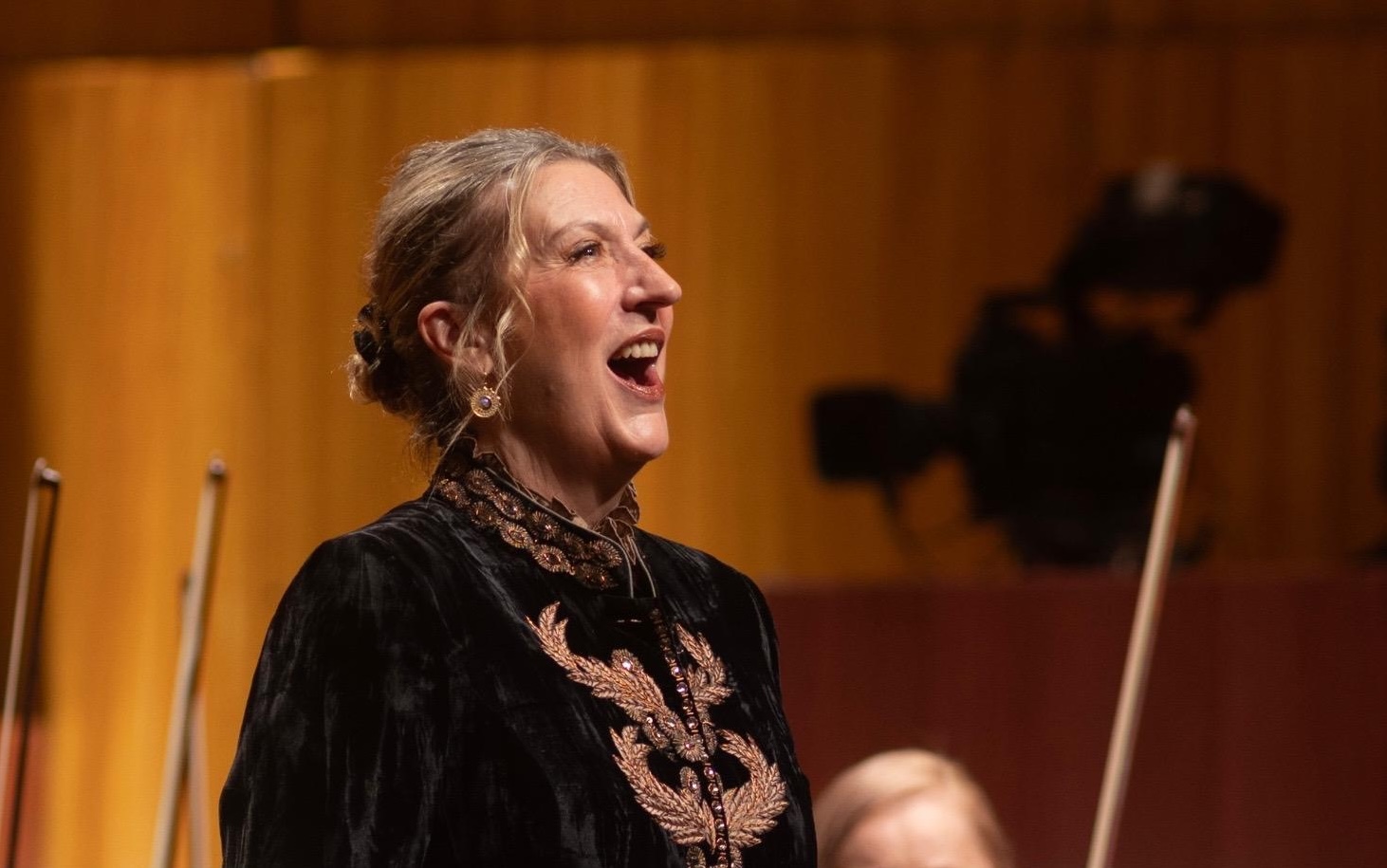
Sarah has shared the pieces that have stayed with her, shaping her work both on and off the stage.
In this series, we look beyond the formal lists of biographies and CVs to explore the repertoire artists return to, and the music they feel most deeply connected to.
We asked Sarah to respond to the following prompts:
Aria I hum round the house / sing in the shower
“Tu, preparati a morire" from Ariodante. I find it perfectly expresses my combative feelings towards certain politicians and a certain ex.
First aria I remember learning
Dido’s Lament and Wayward sisters from Dido & Aeneas. My school put on a concert performance with the local boys school. I wasn’t in the concert but the music and one or two of the boys interested me!
Aria I rely on professionally
"Verdi prati" (Alcina); "Va tacito" (Giulio Cesare); "Will the sun forget to streak" (Solomon).
Last piece of music I deliberately chose to listen to
Some Chausson songs I didn’t know.
Aria I feel most emotionally connected to
Dido’s Lament. There’s something so personal about her farewell and her apology to Belinda for causing so much drama and trouble. The sophisticated harmonic structure and perfect melody inspires me to sing it differently each time.
Aria I wish I could sing / would love to learn next
I wish I could sing Wagner’s Liebestod but that will never happen. I would like to learn the role of La principessa from Suor Angelica. It’s a devastating scene emotionally and the music is really dramatic.
To explore more of Sarah Connolly’s work, visit:
https://www.sarah-connolly.co.uk
Music That Stays: discovering local carol traditions
Wed 31 Dec 2025 @ 6:09
This is not a move to a dream home or long-imagined destination, but a temporary relocation to manage relationships and life responsibilities. Being able to work largely remotely made the move possible, even if the logistics have been far from simple; emotionally, it has opened up something more unexpected. I have always enjoyed new beginnings. Starting again often feels quietly exciting and, perhaps surprisingly, relatively free of expectation.
Arriving somewhere new
Stumbling into song
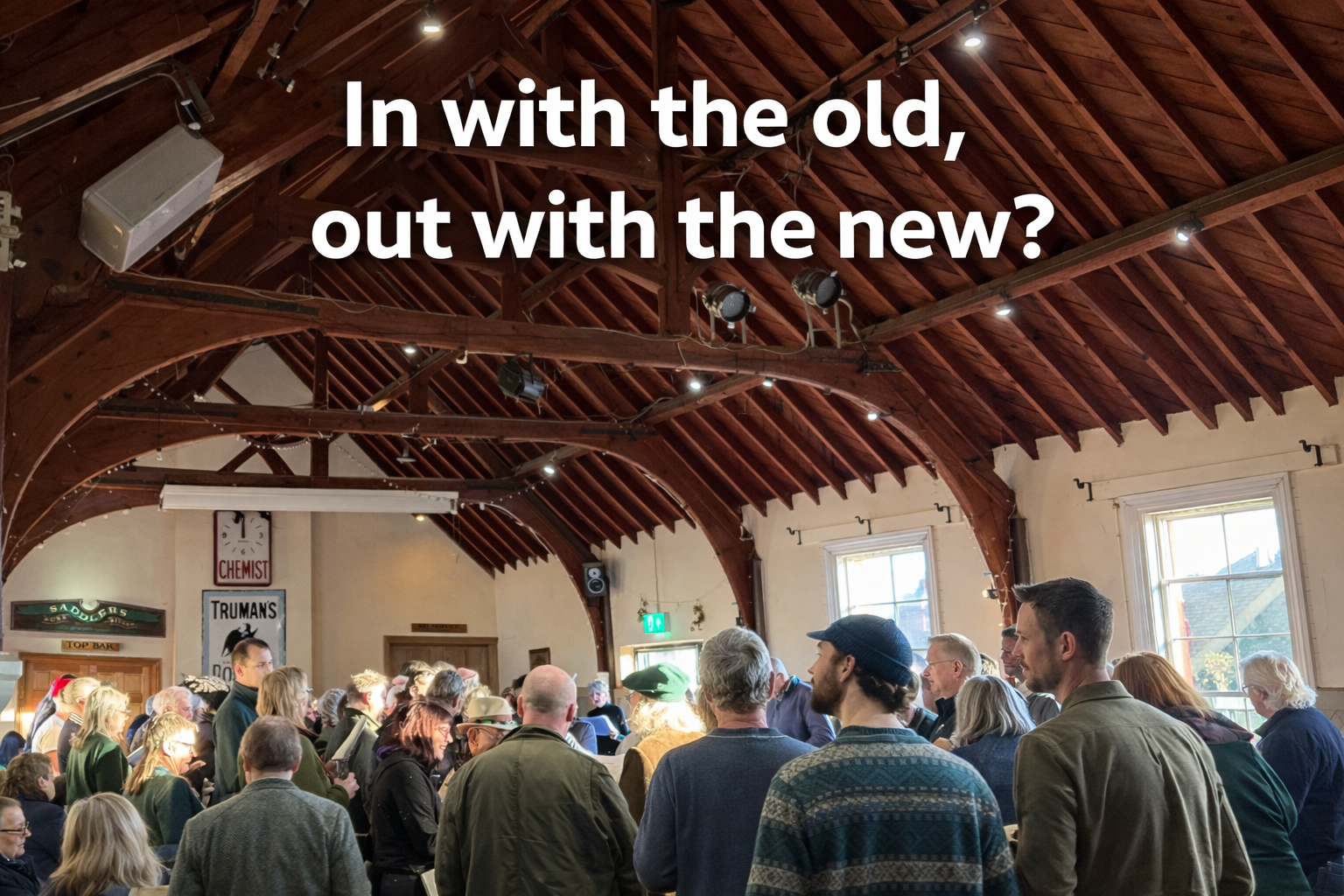
Stepping into a local pub, hearty carols poured from a packed-out side room and greeted us in the hallway. My eyes lit up.
Any singer reading this will know December’s particular madness well: oratorio, concert and service after service, right through to Christmas morning. Gone are the days when my own final run-up to Christmas included multiple Carols by Candlelight performances at the Royal Albert Hall. The highlight of that punishing schedule was always the moment when Steven Devine would silence the choir and we would sit, listening to a packed-out hall sing Away in a Manger. Magical. Then I would leg it to midnight mass before crawling back into central London for the morning service. No doubt many of you are still recovering from similarly relentless schedules.
Strangely familiar?
Back at our accommodation, with curiosity piqued, I went looking for what I had just experienced and found the Castle Carols project in Bishop’s Castle:
https://castlecarols.com/castle-carols-2/
That page, in turn, alerted me to something closer to my new home: a long-running carol-singing tradition associated with Sheffield and North Derbyshire:
https://castlecarols.com/the-sheffield-carols/
Where these songs went
What I love most is the reminder that tradition is rarely one neat, fixed thing. It is messy and local and lived. It evolves. It travels. It splits into versions. It survives because people decide it matters.
Closer to home
I would love to hear about yours.
Are there musical traditions where you live that outsiders rarely encounter? Songs, carols, choirs, gatherings, rituals, or ways of making music that are rooted in place? If so, do tell us. Reply to this email and share a tradition local to you (and where it is kept alive). I would love to learn what exists beyond my own musical map.
And yes, I will admit to a small note of disappointment that I did not get to sing the descant to O Come, All Ye Faithful even once this Christmas. There is always next year.
Wishing you all a wonderful New Year’s Eve and a very happy New Year, wherever you are in the world.
Melanie
Founder, Audition Oracle
PS If you know of local musical gatherings, traditions or seasonal rituals, whether close to home or further afield, I am all ears.
Who’s in the audience today?
Thu 18 Dec 2025 @ 8:44
Who’s in the audience today?
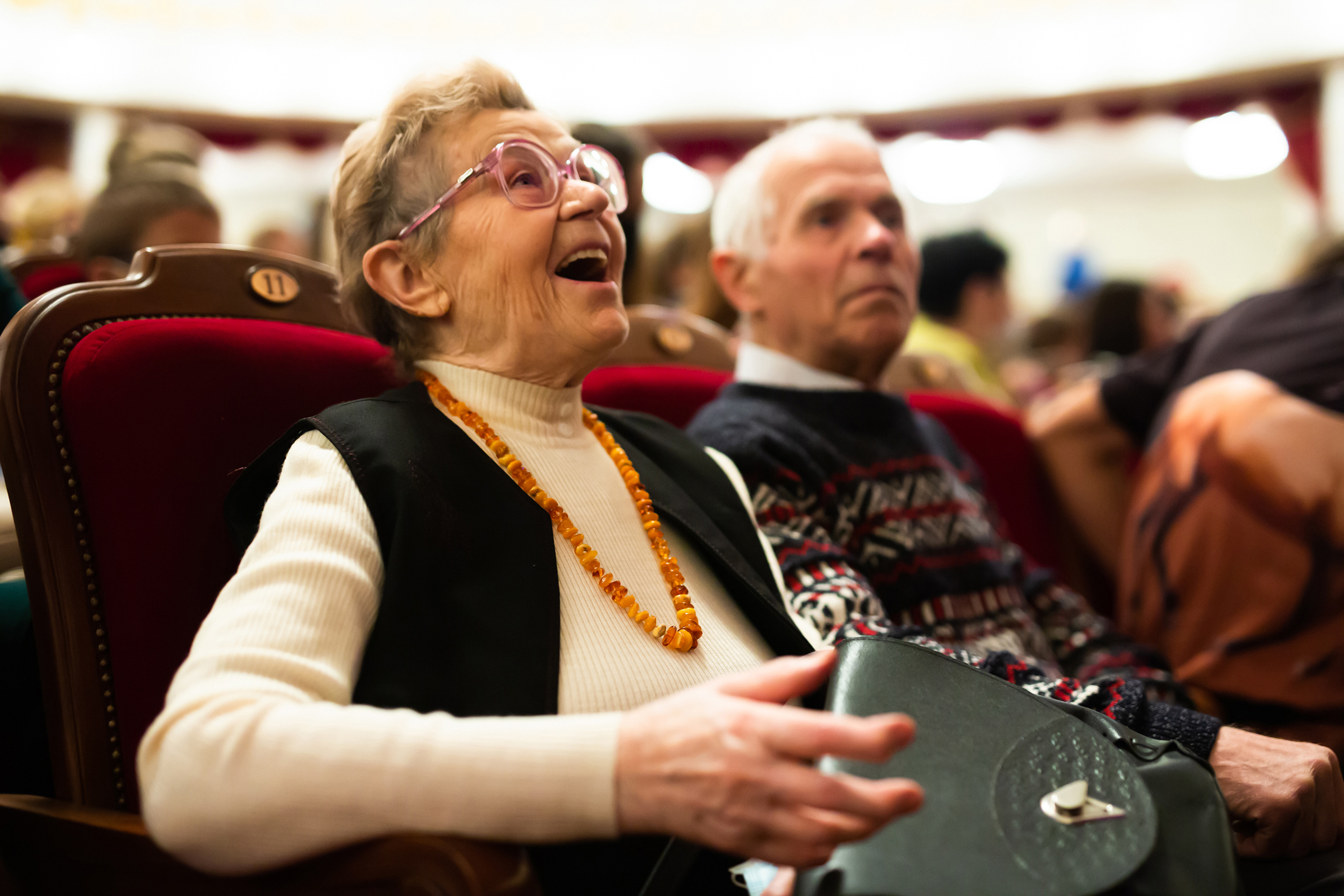
Before the interval lights went down at a recent performance, I found myself chatting to the woman seated next to me. Half the show had already been experienced, and I asked a simple question: how are you enjoying the opera?
Sally is 76. She spoke with real enthusiasm about the production, praising the voices and adding, entirely unprompted, that she didn’t mind the modern dress at all. That alone made me curious. So I asked another question, one I’ve increasingly come to value.
What brought you here today?
Sally grew up listening to old-school musical theatre in the family home — the kind many of us can still hear in our heads decades later. Later came Andrew Lloyd Webber, and operetta such as Die Lustige Witwe. For Sally (and for many), those shows formed a tangible bridge to opera.
In her twenties, living in London, a boyfriend took her to the opera. That first visit marked the beginning of a relationship with opera that has now lasted over 55 years.
Compound interest at its best.
These days, living near Grantham, Sally enjoys seeing opera more locally, in part because it’s more affordable. We find ourselves at the Theatre Royal, Nottingham. She also likes to be close to the action. She knows she could sit in the balcony in London, but she wants a good seat. We’re in the stalls.
Cinema screenings are another way she and her friends keep opera in their lives now. Not the same as live, she says, but good enough. And crucially, accessible.
I asked Sally how she finds opera in its original language. “Oh, I prefer it,” she exclaims. She goes on to explain that she was a language teacher and speaks several languages, and that she loves recognising words and working out the meaning as she listens. It’s also worth noting: Sally doesn’t sing, and she doesn’t play any musical instruments.
Listening to her, I am reminded that many of us start in similar places — musical theatre as a first doorway, then operetta, then opera. Different generations. Familiar pathways.
After the show, I spoke to Liz, 82. She and Sally had come as part of a larger group that enjoys live theatre and music, travelling together for over an hour to attend the weekday matinee. Her eyes were still brimming with tears long after the cast had left the stage.
What struck me most was this: when Sally and Liz come to the opera, their bodies arrive carrying decades of emotional investment. They have seen many productions of La Bohème. They know the story inside out and have shed many tears before. They take their seats already primed to respond emotionally to an opera they know well.
For us as singers and instrumentalists, it’s a gift we sometimes forget: audiences don’t require perfection to be moved. They need commitment — to the music, the story, and the moment. We are enough more often than we realise.
Everyone I spoke to at that performance commented on the power of music to shift them out of their current state. To transport them. To move them towards feeling something different to whatever they arrived carrying. That is no small thing to offer another human being in the middle of an ordinary week.
And it’s also why I want to encourage something very simple over the coming weeks.
If you find yourself at a performance, try talking to the person seated next to you — mid-interval, post-show, or before the interval lights go down. Not to network. Not to gather data. Just to ask one human question:
What brought you here today?
Some of the most beautiful, ordinary and extraordinary conversations I’ve had started as a very simple exchange. In this case, when I came back to my seat in the interval and squeezed past, Sally joked that she was glad I hadn’t returned clutching an ice cream — she’d have been very jealous. For me, that was an invitation to talk.
Sometimes conversations end there. Sometimes they don’t. Sometimes they make the day.
If you do end up having one of those conversations and feel like noting it, you could use #WhosInTheAudienceToday. Not to label anyone. Just to notice them.
Melanie Lodge
Founder, Audition Oracle
Opera, Class, and Who Gets to Belong
Thu 20 Nov 2025 @ 5:40

Why widening who belongs will decide whether opera is a living art form or a luxury niche
Finally, the opera world is talking about socio-economic difference – one of the core factors, alongside exposure, in opera’s lack of diversity.
This is the conversation I've been waiting for.
And yet, now that it has arrived – complete with programmes for “unseen” diversity and panel talks on class – I find I’m not jumping for joy. Mostly I feel a mix of relief, hope, and an uncomfortable sense that this has been there in plain sight for a long time.
If you tackle class, you reshape the landscape
Six years ago, when I created a project called By Voice Alone with a small team of colleagues, it felt impossible to separate questions of diversity from questions of class and money. In conversations around that project, class was often the part of the picture people seemed least comfortable naming out loud.
When we put together the programme for the By Voice Alone final, I used the phrase “working-class” in the introductory text, because that’s my own background. I asked a friend to read it over and their honest reaction was, “‘Working class’ – what does that even mean?”
The day before the event, I rewrote the introduction and reprinted the programmes. I remember feeling foolish, and then slightly erased, as if that part of my story needed to be smoothed out to sound acceptable.
It has always, perhaps naively, seemed clear to me that if you lower socio-economic barriers:
- more people can realistically discover this path in the first place
- you naturally end up with a wider mix of backgrounds – ethnically, regionally, culturally, and educationally
When I was a student at music college in the late 90s, I was painfully aware that many people around me had greater financial means: better instruments, more lessons, more safety nets.
But I was equally aware that there were plenty of us who didn’t. We were there thanks to fee support, government support, student loans, and a fair bit of scrabbling and juggling. The mix (whilst not balanced) was real: working-class, lower-income, comfortably-off, wealthy – all in the same building. Only in recent years have I really recognised how fortunate we were to have even that imperfect mix. It feels far more fragile today.
Over the last decade or so, it has felt increasingly hard to ignore that fewer people from lower socio-economic backgrounds are making it into our top conservatoires, which are currently the largest feeder route into the profession.
The irony – not exactly funny, but telling – is that an art form so associated with elites has historically depended on singers, musicians, and students who often came from far less privileged backgrounds, and were rarely welcomed fully into that elite world themselves. Today, many people from similar backgrounds do not even reach the training stage, because they never find a way in or cannot afford to stay. Yet opera has never belonged only to the elite: the same operas were heard from the gallery as in the boxes, and ballad operas, parodies, and popular reworkings carried the stories and tunes out into other theatres and onto the streets.
Not outside the tent shouting in
I don’t believe there’s a secret plot to keep anyone out of opera. What I see instead are systems and habits that end up shutting people out, even when most individuals don’t intend them to.
Most people I meet in this world care deeply about the art form and are genuinely trying to do good. Many are pushing hard, often under-resourced, to change things.
So I am glad we’re finally talking about class. But certain things still jar.
There’s a high-profile talk at a major institution billed as confronting class barriers in classical music. Day tickets are around £125.
I say this not as an outsider judging the price, but as someone inside the profession looking at that figure and genuinely thinking:
“Can I afford to attend this?”
To be fair, they do what many of us do: add a line saying, “If cost is a barrier, please get in touch.”
We say something similar on Audition Oracle.
But what I’ve noticed over time is that sometimes the people who contact us for help are not the ones in the most precarious position. Some who genuinely need it do find the courage to ask, and I’m always glad when they do, but many don’t.
The people really counting the pennies – the ones choosing between an audition trip and the week’s food shop – are often too proud, too anxious, or too exhausted to ask.
So “just email us if you can’t pay” is kind, and better than nothing, but it doesn’t magically remove the barrier.
At the same time, as a sector, we’ve poured a lot of time and money into consultations, round tables, and reports trying to diagnose the problem. Some of that is necessary and has produced important insights. But if we’re honest, there are times when talking about change seems better resourced than actually building the kinds of ongoing, mixed, participatory spaces that change requires – and that isn’t something any one company, however well-intentioned, can solve on its own.
Why I started Audition Oracle
This isn’t abstract for me.
I started Audition Oracle (AO) out of sheer, practical frustration: once I’d left music college, there was no simple, central place to find auditions and opportunities. Information was scattered, and unless someone showed you the routes in, you were piecing it together on your own.
AO grew out of that real need for access to information. It’s essentially a noticeboard for people already on the path, helping you see more of what’s out there and make more informed choices.
It doesn’t fix the earlier problem: it doesn’t put music back into schools, or get someone into their first youth choir, or help a teenager discover opera for the very first time. By the time AO is useful, you’ve already discovered opera. It’s one small piece in the middle of the pipeline, not the beginning.
In practice:
- Companies and organisations can create an account and post their auditions and opportunities for free.
- Those listings can be made fully public, or visible to all singers with a free account, whether or not they ever choose to pay us.
- There is an optional paid membership with stronger filters and time-saving tools – but a huge amount of information is available to anyone with a free login.
As with opera companies and training institutions, we live with the same tension:
How do we keep the lights on and keep things genuinely accessible?
People want to take part, not just watch
When we talk about access in opera, we rightly talk a lot about money: fees, travel costs, pay, and bursaries.
In my own life, though, I’ve seen that the barrier isn’t only financial; it’s also about discovering the art form in the first place, and understanding how to find your place in it once you do.
Some members of my family have felt uncomfortable in and around the opera world. Not because they dislike the music, but because the spaces, the codes, and the culture haven’t always felt like they were “for people like us”.
People today are hungry for connection – to feel part of something, not just sit in the dark and watch other people live their creative lives. It’s no accident that choral singing is booming. Millions of people turn up every week to choirs, community groups, song circles, and other kinds of shared music-making, not because they’re chasing a career, but because they want to join in and feel what it is like to literally sing in harmony.
Opera knows all about the power of collective sound. There is nothing more thrilling than hearing a beautiful, big, vulnerable voice soaring over a huge orchestra – except perhaps hundreds of voices joined together with the raw power of live music-making. It’s even more extraordinary to be inside that sound – listening and contributing with your own body.
There are lots of learning and participation projects in and around opera and classical music, many of them doing thoughtful, committed work. Sometimes the big companies are asked to do so much outreach, on such tight resources, that it can start to pull focus from the core job of making great opera in the first place. And even with all that effort, many of these projects are still quite siloed: separated by age, background, or perceived “level”, or kept at one remove from the main stages and decision-making.
The bigger question is how people first discover opera at all, and then how we invite them to engage, not just observe.
If there’s no room at the table to join the card game, people will simply wander into another room – a choir, a band, a drag show, a jam session, and a TikTok account – where their own voice, craft, or skill clearly has value.
Belonging in practice
When I was growing up, my model of community was my small village church. I no longer follow that religion, but one thing that’s stayed with me is how the whole village existed in that space: all ages, all walks of life, in one room, week after week.
That feels quite rare now.
One of the projects I’ve watched blossom over the years that seems to come close to that village-church feeling for me is Celebrate Voice, founded by Lynsey Docherty. It brings together a range of ages and musical styles – opera, jazz, music theatre, folk, and family shows – alongside participatory singing and community events, all in the same ecosystem rather than in separate boxes. Yes, there are world-class musicians, but what strikes me, reading their words, is the emphasis on involving local people throughout the festival. The invitation isn’t just to buy a ticket, but to become part of an uplifting local community that helps to make the festival happen.
To me, that’s what “access” can look like in practice: a space where opera and other art forms, and people of many different kinds, exist side by side – where you can walk in, whoever you are, at whatever stage of life, and work out how to be there in your own way, not because “inclusion” is written in a policy, but because the culture is genuinely open and lived. It feels closer to how many people actually live their musical lives now, with styles blending and bleeding into each other, rather than sitting in rigid, separate categories.
These days, nature is my religion for solitude. And for human connection? It’s music, every time.
Being in a room where voices of all ages, backgrounds, and abilities are raised together does something different from anything a strategy document can do. It reminds you that you’re part of something bigger, and that your voice, when joined with others, is magnified – more visceral, more powerful, and more fulfilling. It can deepen the whole spectrum of what you feel there: the heartache, the joy, and the curiosity that brought you into the room in the first place.
If opera wants a future, I suspect we’ll need more of that:
- more all-ages, mixed-background spaces where opera sits alongside and interweaves with other kinds of music and creativity
- more projects that bring different people into the same room, not just separate streams running in parallel
- more festivals and companies that grow out of real community connection, not just top-down programming and a good paragraph in a funding bid
Structures matter. Money matters. But there’s also the moment of caring. When people discover opera, they need the chance to fall for it – to become emotionally invested enough that it feels worth the effort it takes to stay.
And of course, there are people who break the pattern I’ve described. Once some singers are “in” – once they’ve found opera, caught the bug, and had even a tiny glimpse of what’s possible – they will crawl over broken glass to keep going, whatever their bank balance says. I’ve seen that grit up close. The deeper tragedy is how many never get to that point at all, because they were never given the chance to discover it or to see a place for themselves inside it.
Where this leaves opera
I’m less interested in more talk about change, and more interested in what it actually means for opera itself. I don’t think this is a problem opera companies can “fix” on their own: it’s about schools, communities, broadcasters, digital spaces, festivals, and yes, opera institutions too, all shaping how people first meet this art form, and whether they have a chance to stay.
- How do we help people discover opera in the first place, not just at conservatoire age, but as children, teenagers, and adults who’ve never set foot in an opera house?
- How do we share it with the world in ways that invite people to stop and take an interest, rather than walk past?
- How do we design projects that don’t just tell people “you’re welcome”, but actually spark curiosity to delve deeper into such a layered musical experience?
My own path to opera wasn’t straightforward. I hadn’t seen an opera on stage until I was already at music college. I didn’t grow up assuming it was “for me”. I found my way in thanks to a mixture of chance, stubbornness, government support, and systems that, at the time, still had a few more rungs on the ladder.
I don’t expect opera, or any institution, to fix my life; my path is my own responsibility. What I do believe in is shared responsibility for the culture we build around the art form. Widening who belongs isn’t about creating special corners for different groups, or smoothing us all into the same beige shape. It’s about letting the circle grow wider so more kinds of people can stand in it together, as they are, held by a shared love of the music.
I’d love us to build a world where more people get the chance to stumble into opera, fall head over heels for it, and then actually be able to stay.
Because if we tackle class, widen the pipeline, deepen the sense of belonging, and genuinely reopen the room to people who have been pushed to the margins, shut out, or quietly drifted away in recent decades, we don’t just “save” opera.
We make it more alive than it has ever been.
If this brings anything up from your own experience of access, class, or belonging in opera, you’re very welcome to get in touch at [email protected] or through Audition Oracle.
And if you’ve made it to the end, thank you. There is no prize, just my appreciation.
Melanie Lodge
Founder, Audition Oracle
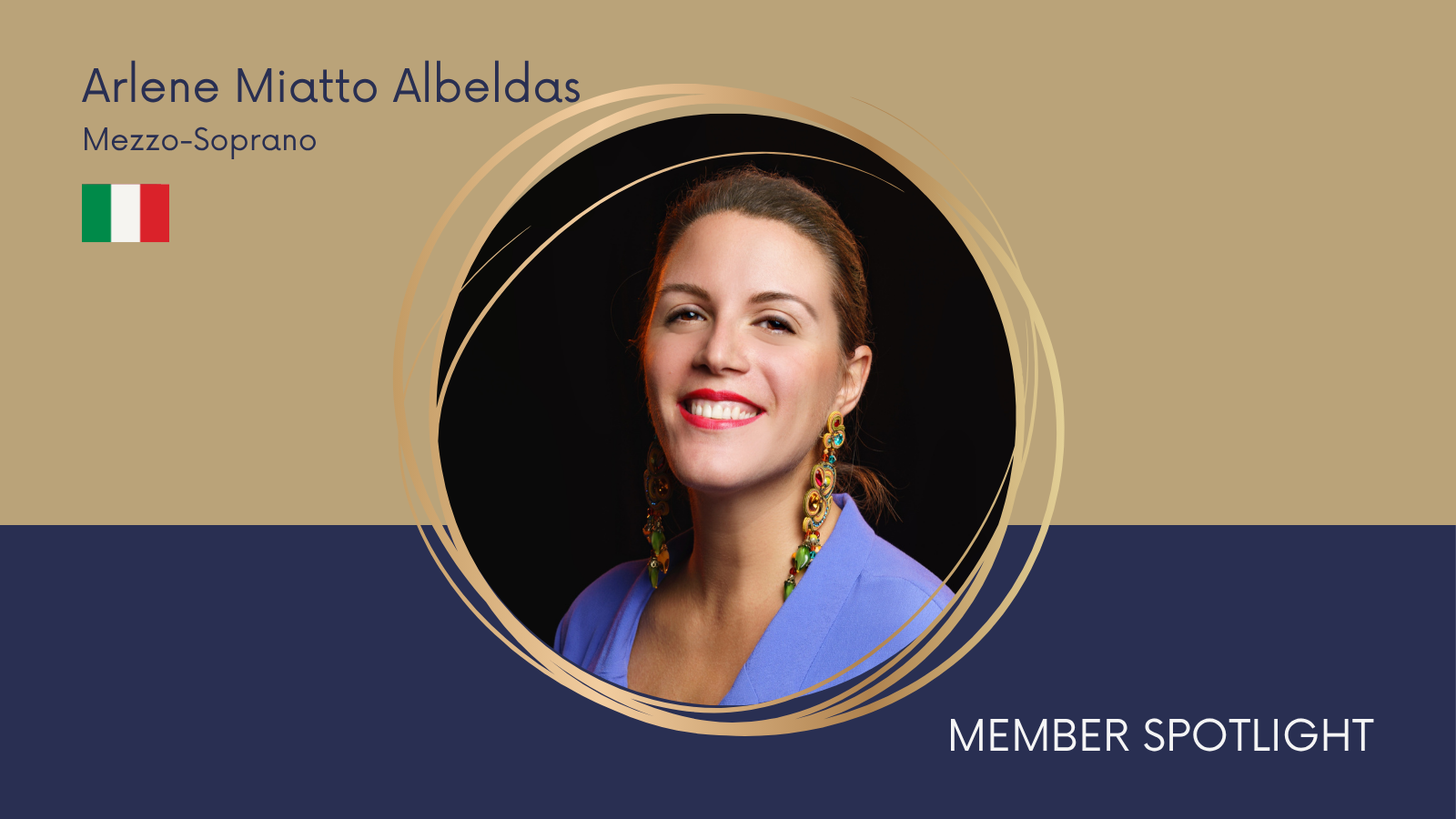
Member Spotlight: Arlene Miatto Albeldas - mezzo-soprano
Tue 8 Jul 2025 @ 15:54
1. How do you describe yourself as an artist?
2. What other skills or passions do you have that help shape you as an artist?
Dance is another big passion of mine. I once took a course that covered 15 different styles—from salsa to swing to contemporary—and I found it incredibly enriching. It gave me more awareness of my body, rhythm, and how movement can express emotion in so many different ways.
I also love photography and videography—capturing moments, editing, and telling stories visually is another creative outlet for me. And whenever I have time, I really enjoy sitting in a café with a cup of tea and observing people. I find it not only relaxing, but also an invaluable exercise in character study—watching gestures, dynamics, and energy.
I vividly remember our first day at NOS, when we were encouraged to take weekends off to experience life—visiting museums, discovering local culture—because if we don’t truly live, how can we authentically express life on stage? That idea stuck with me and has become my personal mantra. I try to live fully, savor every experience, embrace new adventures, and always look for the silver lining.
3. What has been the most memorable and rewarding experience you have had as an artist?
The second unforgettable moment was when I performed Mahler’s Symphony No. 3 at Cadogan Hall. Sitting in the heart of the orchestra, listening to the final two movements, was an experience I’ll never forget. During one powerful crescendo, I felt the sound reverberating up my spine, overwhelming me to the point where my eyes welled up with tears. I had to hold them back, though, knowing I couldn’t let myself cry in front of the audience. It was a profoundly moving moment that I’ll carry with me always.
The third was during the final performance of The Queen of Spades at The Grange Festival, where I played Polina. Sondra Radvanovsky herself was in the audience, and after the show, at the farewell drinks, she crossed the room to personally congratulate me. She told me my voice was incredible and that I had a strong stage presence. Sondra Radvanovsky!! It was a surreal and humbling moment that I will never forget.
4. What role, company or performing situation would be a dream come true for you as an artist?
At the same time, London has become a second home to me, and the Royal Opera House (now known as the Royal Ballet and Opera) is deeply meaningful as well—artistically and personally.
And when I allow myself to dream really big… I imagine stepping onto the stage of the MET Opera, singing Octavian in Der Rosenkavalier, and sharing the stage with the incomparable Renée Fleming as the Marschallin and Erin Morley as Sophie. I know Renée doesn’t perform the role anymore—but that specific cast, that moment in time, would have been the ultimate dream come true.
5. What do you like most about being a creative artist?
6. If you could go back in time and give your younger self one piece of advice, what would it be?
7. Three words that are the pillars you shape your career by:
8. What have you been up to recently, and where can our folowers see and hear you next?
In May, I debuted the role of Bersi in Andrea Chénier at Teatro Regio di Parma, alongside the amazing Saioa Hernández, Gregory Kunde, and Luca Salsi—a lifetime experience to share the stage with them!
I will soon debut the role of Beppe in L'amico Fritz by P. Mascagni at Teatro Goldoni in Livorno. Can't wait to be back in a trouser role!